The New "Big 3" ISO Standards: Critical Frameworks for Modern Life Sciences Organizations
In today's complex regulatory environment, three key ISO standards are emerging as essential tools for life sciences companies managing data security, privacy, and AI governance.
4/28/20254 min read
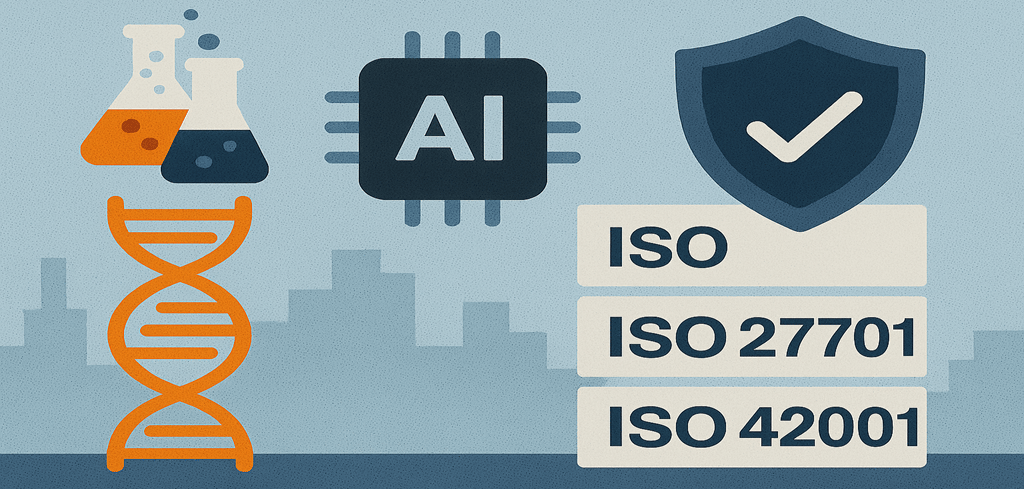
The life sciences industry stands at the intersection of rapid innovation and strict regulatory oversight. As organizations collect and process increasingly sensitive data while deploying cutting-edge AI solutions, they face a complex web of compliance requirements across global markets. Three ISO standards are now emerging as the essential framework for responsible operations: ISO 27001, ISO 27701, and ISO 42001.
The Emerging Compliance Trifecta
These three standards work together to address the most pressing governance challenges in modern life sciences:
ISO 27001 protects your information assets through a comprehensive Information Security Management System (ISMS).
ISO 27701 extends this protection specifically to privacy concerns, creating a Privacy Information Management System (PIMS).
ISO 42001 completes the picture by establishing an Artificial Intelligence Management System (AIMS) for ethical and responsible AI deployment.
Together, they form a holistic approach that's becoming the gold standard for life sciences organizations seeking to build trust with regulators, partners, and patients.
ISO 27001: The Foundation of Information Security
In an industry where proprietary research, clinical trial data, and patient information represent both critical assets and significant liabilities, ISO 27001 provides the structured approach needed to safeguard this information.
The standard helps organizations systematically identify security risks, implement appropriate controls, and continuously monitor their effectiveness. For life sciences companies, this translates to protection against data breaches that could compromise patient confidentiality, intellectual property, or regulatory compliance.
Consider a pharmaceutical company developing a breakthrough treatment. By implementing ISO 27001, they can ensure that their clinical trial data remains secure from both external threats and internal mishandling. This not only protects their competitive advantage but also ensures compliance with regulations like 21 CFR Part 11 and HIPAA.
ISO 27701: Elevating Privacy Protection
As privacy regulations like GDPR and CCPA continue to evolve, life sciences organizations face increasing scrutiny over how they handle personal data. ISO 27701 builds upon the ISO 27001 framework to specifically address these privacy concerns.
This extension helps organizations demonstrate compliance with privacy regulations by establishing clear processes for collecting, processing, and protecting personal information. For life sciences companies operating across multiple jurisdictions, this standard is particularly valuable in navigating complex and sometimes contradictory privacy requirements.
A biotech company conducting global clinical trials, for example, can use ISO 27701 to establish consistent privacy practices that satisfy regulators in Europe, North America, and Asia. This not only reduces compliance risks but also builds trust with patients and research participants who entrust the company with their sensitive health information.
ISO 42001: Governing AI in Healthcare Applications
As artificial intelligence transforms everything from drug discovery to clinical decision support, ISO 42001 offers a much-needed framework for ensuring these powerful technologies are deployed responsibly.
This newer standard addresses the unique governance challenges of AI systems, including issues of transparency, bias, and ethical use. For life sciences organizations, implementing ISO 42001 helps ensure that AI applications maintain the high standards of safety and efficacy expected in healthcare settings.
A medical device manufacturer developing an AI-powered diagnostic tool, for instance, can use ISO 42001 to establish governance processes that address potential algorithmic bias and ensure transparency in how the system makes recommendations. This not only supports regulatory approval but also builds physician and patient confidence in the technology.
The Integrated Approach: Greater Than the Sum of Its Parts
While each standard delivers significant value individually, their real power emerges when implemented as an integrated system. This comprehensive approach allows life sciences organizations to:
Streamline compliance efforts by addressing overlapping requirements once rather than in separate systems
Reduce audit fatigue by consolidating certification processes
Present a unified governance story to regulators, partners, and investors
Build a culture of responsible innovation that balances progress with protection
FullStory, a leading provider of digital experience analytics, exemplifies this integrated approach. By achieving certification in all three standards, they've created a comprehensive governance framework that addresses the full spectrum of security, privacy, and AI risks. This not only strengthens their compliance posture but also differentiates them in a competitive market where trust is increasingly valuable.
Implementation Considerations for Life Sciences Organizations
For life sciences organizations considering these standards, a phased approach often works best:
Start with ISO 27001 to establish the core information security framework
Add ISO 27701 to address specific privacy requirements
Incorporate ISO 42001 as AI becomes more central to operations
Throughout this journey, it's essential to focus on integration rather than treating each standard as a separate compliance exercise. This means:
Establishing a unified governance committee
Creating consistent documentation and training
Implementing complementary controls where possible
Developing integrated audit processes
Looking Ahead: The Non-Negotiable Future of Life Sciences Compliance
As data-driven innovation accelerates in life sciences, ISO 27001, ISO 27701, and ISO 42001 have solidified their status as mandatory requirements for serious market participants. The question isn't whether to implement these standards, but how to do so most effectively.
Organizations that adopt an integrated approach to these frameworks will not only meet basic market requirements but also position themselves for greater operational efficiency and marketplace trust—converting mandatory compliance investments into sustainable competitive advantages.
For life sciences companies navigating this complex regulatory landscape, the path forward is clear: these standards must be implemented, and they should be implemented with strategic integration that maximizes their organizational value.
With experience at the intersection of IT operations, compliance, and user-centered support, we have seen how thoughtful service strategies can reduce friction and accelerate outcomes—especially in high-stakes environments like life sciences and higher education. It’s always rewarding to partner with teams committed to improving workflows, modernizing systems, and delivering real value to their end users.
This article provides general information and should not be construed as legal advice. Organizations should consult with qualified professionals when implementing ISO standards.