The Critical Role of IT Support in Life Sciences: Minimizing Delays and Maximizing Compliance
In the life sciences sector, delays in IT support aren’t just inconvenient—they can have far-reaching effects. Disruptions to research timelines, compliance milestones, or manufacturing schedules can ultimately impact delivery outcomes.
Mohi Jargboh-Sillah
3/15/20253 min read
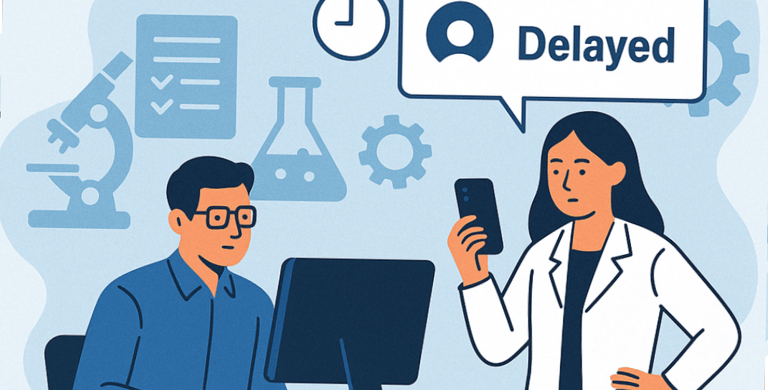
As one IT manager joked, “In our labeling team, a one-hour printer issue delays science—at home, it’s just an excuse not to print your kid’s homework.” In life sciences, the stakes are just a little higher.
Here’s a scenario many in the life sciences space will recognize:
A Quality Team was preparing to launch a Good Manufacturing Practice (GMP) system qualification. At 2:30 PM, the project manager sent a Microsoft Teams message to the assigned technician to validate lab printer settings—an essential pre-check before the qualification could begin. The technician’s status showed “Available,” but in reality, they had left the office unexpectedly and hadn’t updated their status. After receiving no response for over an hour, the manager submitted an urgent ticket. By then, the shift had ended, and the issue remained unresolved until the next day. The delay forced a one-day rescheduling of the validation kickoff and created a ripple effect across Quality, Manufacturing, and IT.
This incident highlights the need for efficient, transparent, and reliable IT service request processes—especially in regulated environments where IT supports time-sensitive scientific and compliance-related work.
Five and half Strategies to Improve IT Support in Life Sciences
Centralize the IT Helpdesk Portal Avoid relying solely on Slack, Teams, or email for support. A centralized ticketing system ensures all requests are tracked, visible, and systematically addressed. It also provides insight into technician availability and workload in real time.
Automate Routing and Prioritization Use automation to triage and route tickets based on urgency and potential impact. For instance, a request related to system validation or data integrity should be flagged and escalated automatically.
Maintain Transparent End-User Communication. Notify users about ticket status and estimated resolution times. Automated updates—paired with clear escalation paths—can prevent unnecessary project delays due to missed expectations.
Leverage Analytics to Drive Improvement Review historical ticket data to identify common bottlenecks, repeat issues, or areas where response times lag. This enables continuous improvement through informed decision-making.
Promote Training and Cross-Functional Collaboration. Encourage regular training for IT staff on lab and compliance systems. When IT understands business-critical workflows, response quality improves, and collaboration strengthens across teams.
HALF. The half is really important because it provides the opportunity for integration of AI to Accelerate and Scale Support Efficiency
While each of the previous five strategies offers standalone value, AI is the force multiplier that can elevate them from good to exceptional. From triaging requests to predicting demand patterns, AI technologies like natural language processing, machine learning, and automation bots ensure that IT support is not just responsive—but intelligent and scalable.
How AI reinforces the first five strategies:
Enhances centralization with self-service chatbots and natural language issue logging
Improves prioritization with smart ticket routing based on urgency, history, and sentiment
Enables transparency with real-time status updates and conversational interfaces
Drives improvement through predictive analytics and proactive anomaly detection
Supports training by recommending contextual solutions and curated knowledge to staff
In essence, AI doesn’t replace IT teams—it makes them faster, smarter, and more in sync with the needs of researchers, compliance teams, and lab users.
Aligning with ITIL 4 Service Management Best Practices
These strategies align with the ITIL 4 framework, which emphasizes value-driven service management. ITIL 4 advocates for centralized request fulfillment, automation, knowledge management, and communication transparency—key components for delivering consistent and reliable IT support.
By adhering to these principles, life sciences organizations can strengthen IT responsiveness while maintaining the speed and integrity required by research and compliance teams.
Key Takeaways
Implement a centralized ticketing system with technician visibility
Automate ticket prioritization based on business impact
Communicate proactively with users regarding issue status
Use data analytics to refine workflows
Provide ongoing training to foster better IT-business alignment
With experience at the intersection of IT operations, compliance, and user-centered support, we have seen how thoughtful service strategies can reduce friction and accelerate outcomes—especially in high-stakes environments like life sciences and higher education. It’s always rewarding to partner with teams committed to improving workflows, modernizing systems, and delivering real value to their end users.